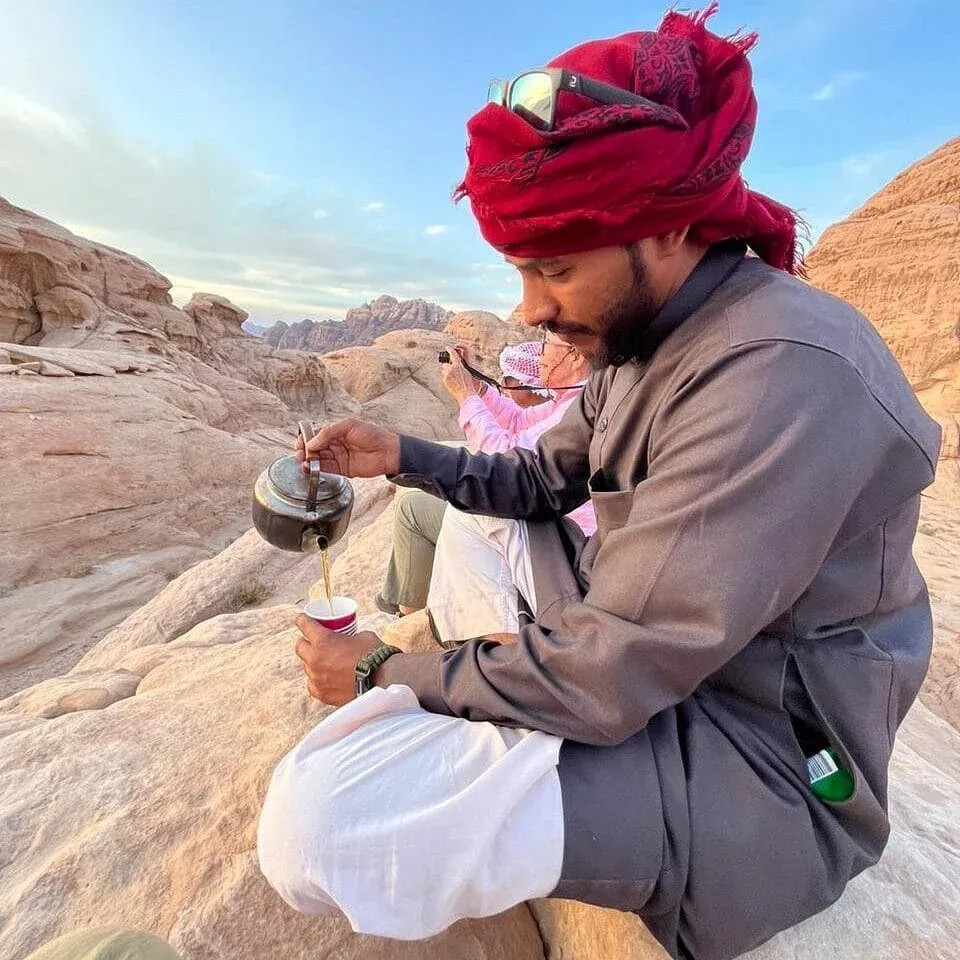
The Wadi Rum desert is open all year round, but each season offers a completely different experience. As a Bedouin guide who grew up in this desert, I can tell you there is no single “best season”. There is only the right season for you.
In this guide, I go through each season honestly: temperatures, pros, cons, and which kind of traveller it suits best. No sugar-coating, just how it really is on the ground.

Spring (March to May): the favourite season
Weather and temperatures
Spring is the most popular time to visit Wadi Rum, and for good reason. Days are warm and pleasant (18°C to 28°C), nights are cool but comfortable, and the desert truly comes alive.
- Temperatures: Day 18–28°C | Night 8–15°C
- Sunshine: 8 to 10 hours a day on average
- Rain: A few light showers possible in March, rare from April
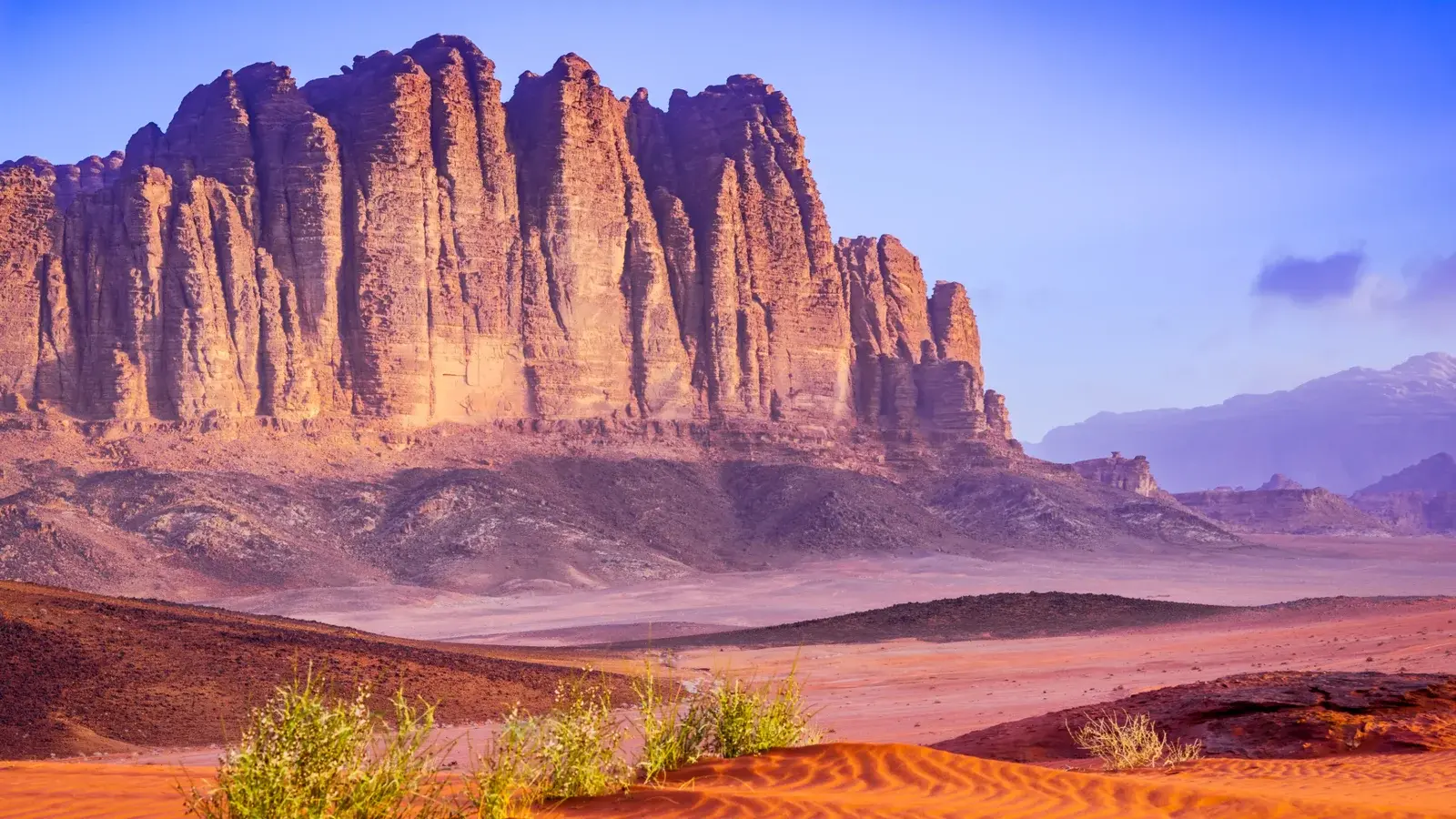
Why visit in spring?
- Ideal conditions for hiking: neither too hot nor too cold
- Occasional wildflowers between the rocks and dunes
- Golden light at the end of the day, magical for photography
- Comfortable nights for stargazing around the campfire
- Every activity available: jeep tour, camel ride, climbing, a night in the desert
Things to watch
- High season means high demand. Book at least 2 to 3 weeks ahead
- Can be busy over Easter and the spring school holidays
Autumn (September to November): the well-kept secret
Weather and temperatures
Autumn is probably Wadi Rum’s best-kept secret. The summer heat has gone, the light is warm and golden, and there are far fewer crowds than in spring.
- Temperatures: Day 20–32°C | Night 10–18°C
- Sunshine: 9 to 11 hours a day
- Rain: Very rare: it is the driest time of the year

Why visit in autumn?
- Fewer tourists: you often have the desert to yourself
- Slightly warmer nights than in spring, ideal for sleeping under the stars
- October and November bring the clearest skies of the year
- No need to book weeks ahead, so more flexibility
- Beautiful amber and terracotta tones in the afternoon light
Things to watch
- September can still feel hot at midday: bring plenty of water
- Some small camps may still be closed after the quiet summer season
Winter (December to February): the desert at its rawest
Weather and temperatures
Winter in Wadi Rum surprises many visitors. Days can be warm and sunny, but nights drop sharply, sometimes below zero. Snow is rare but possible, and the desert takes on a dramatic, almost unreal quality.
- Temperatures: Day 10–18°C | Night 0–5°C (can drop below 0°C)
- Sunshine: 6 to 8 hours a day
- Rain: Possible, especially in January and February

Why visit in winter?
- The desert is almost empty: an incredibly intimate experience
- Crystal-clear air means extraordinary stargazing
- The light is soft and beautiful: photographers love it
- Daytime temperatures ideal for long hikes
Things to watch
- Nights are cold: we provide mattresses, duvets and extra blankets in winter, but still bring warm clothes
- Some open-air camps are not suited to January without heating
- Rain can sometimes make the tracks slippery for jeep tours
Summer (June to August): for the brave
Weather and temperatures
Summer is the most demanding season in Wadi Rum. Temperatures regularly reach 40°C in the afternoon. That said, for travellers who adapt (early mornings, shade, a slow pace), it is possible and even rewarding.
- Temperatures: Day 35–42°C | Night 20–25°C
- Sunshine: 13 to 14 hours a day
- Rain: Extremely rare, practically none
Why some people visit in summer
- Very few tourists: you have the desert to yourself
- Mild nights, perfect for sleeping outside under the stars; bring a light layer
- The quietest time of the year in the desert
- Spectacular sunsets in deep, fiery colours
Things to watch
- Physical activities are limited to early morning (before 9 am) and late afternoon
- Staying hydrated is crucial: drink at least 3 to 4 litres a day
- Not recommended for young children, elderly people or anyone sensitive to heat
The seasons at a glance
| Season | Temperatures | Crowds | Best for |
|---|---|---|---|
| 🌸 Spring | 18–28°C by day | ★★★★☆ High | All travellers |
| ☀️ Summer | 35–42°C by day | ★★☆☆☆ Low | Early risers |
| 🍂 Autumn | 20–32°C by day | ★★★☆☆ Moderate | Photography & hiking |
| ❄️ Winter | 10–18°C by day | ★★☆☆☆ Low | Solitude & stars |
For the detail month by month (day and night temperatures, rain), see our guide to the Wadi Rum weather.
Which season suits you?
Families with children
Spring (April to May) is your best choice. Pleasant temperatures, easy activities and mild evenings. Avoid summer with young children.
Photographers and landscape lovers
Autumn (October to November) gives you the most consistent golden light and the emptiest desert. Winter mornings can be spectacular if you don’t mind the cold.
Adventurers and hikers
Spring for long hikes and climbing. Winter for exploring alone and that feeling of having the desert all to yourself.
Travellers who want peace and quiet
Winter or summer: the desert is at its quietest and it is easier to book. In summer, plan your day around the midday heat.
Honeymoons and couples
Every season works, but autumn offers the most romantic balance: warm days, cool nights and very few other travellers around you.
Ready to plan your desert adventure?
Whatever season you choose, I will personally make sure your stay in Wadi Rum goes beyond your expectations. Jeep tours, camel rides, hikes and nights under the stars: everything is adapted to the season and to what you love.
— Eid, your Bedouin guide at Wadi Rum Best Tours