The desert looks empty, but it is full of life. Most animals are shy and come out at dawn or at night, so you mostly see their tracks in the sand. Here are the animals of Wadi Rum, from the camels we live with to the oryx that came back.
Camels, our companions
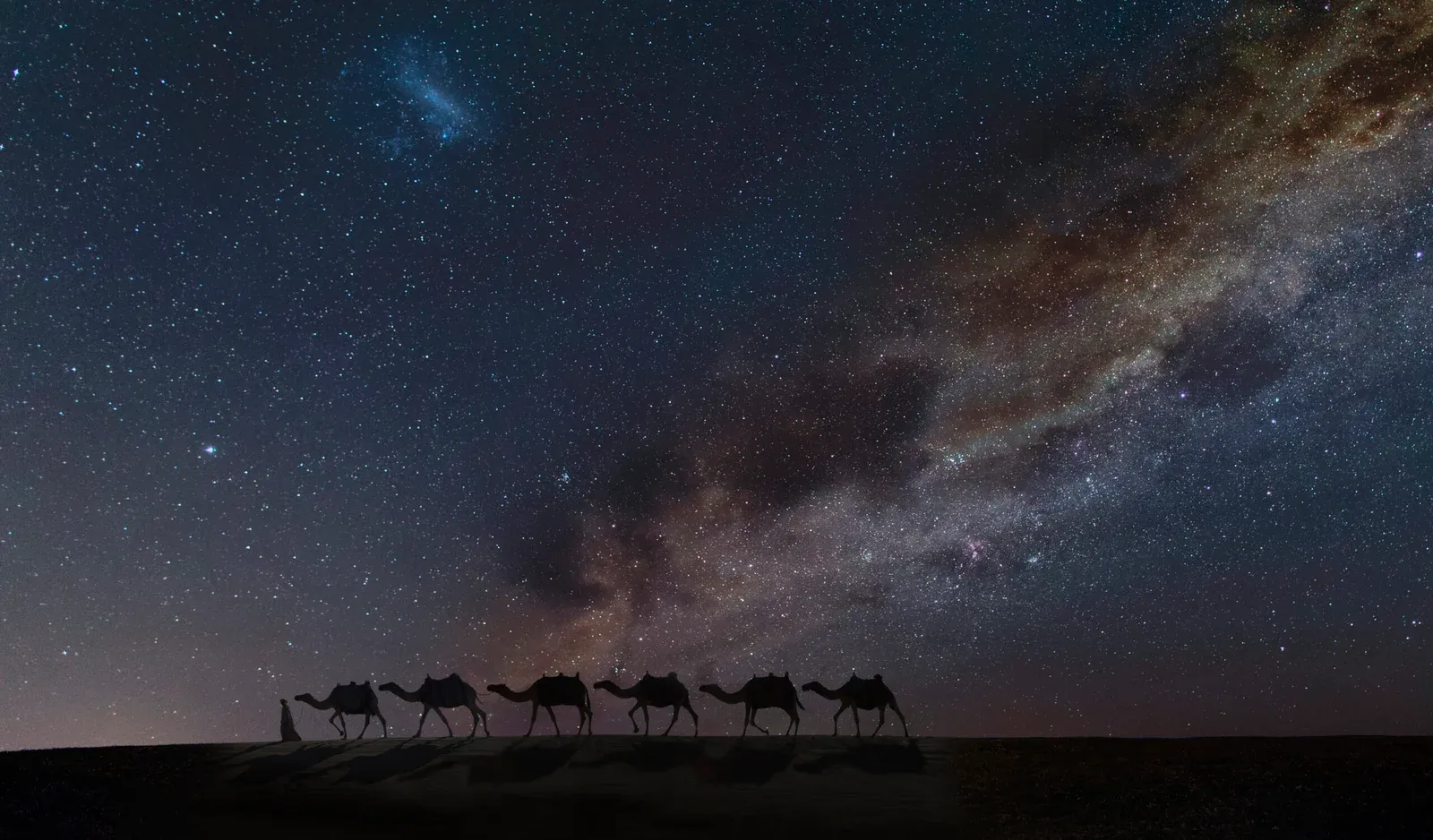
The animal you will see the most is the camel. They belong to Bedouin families and wander freely in the valleys, often in small groups with their young. For centuries, the camel carried our families, our water and our tents across the desert.
The Arabian oryx, back in the desert
The Arabian oryx, a white antelope with long straight horns, had disappeared from Jordan because of hunting. In 2009, the United Arab Emirates gave 20 oryx to Jordan for Wadi Rum, and the herd grew in a protected area of the reserve. Today the reintroduction programme continues, and hunting the oryx is forbidden. Seeing one is rare: they live in quiet, protected parts of the desert.
Ibex, foxes and other mammals
About 26 species of mammals live in the protected area. The Nubian ibex, a wild goat with big curved horns, lives on the high mountains. Foxes, hares and small rodents come out at night. In the morning, we often read their stories in the tracks around camp.
Birds
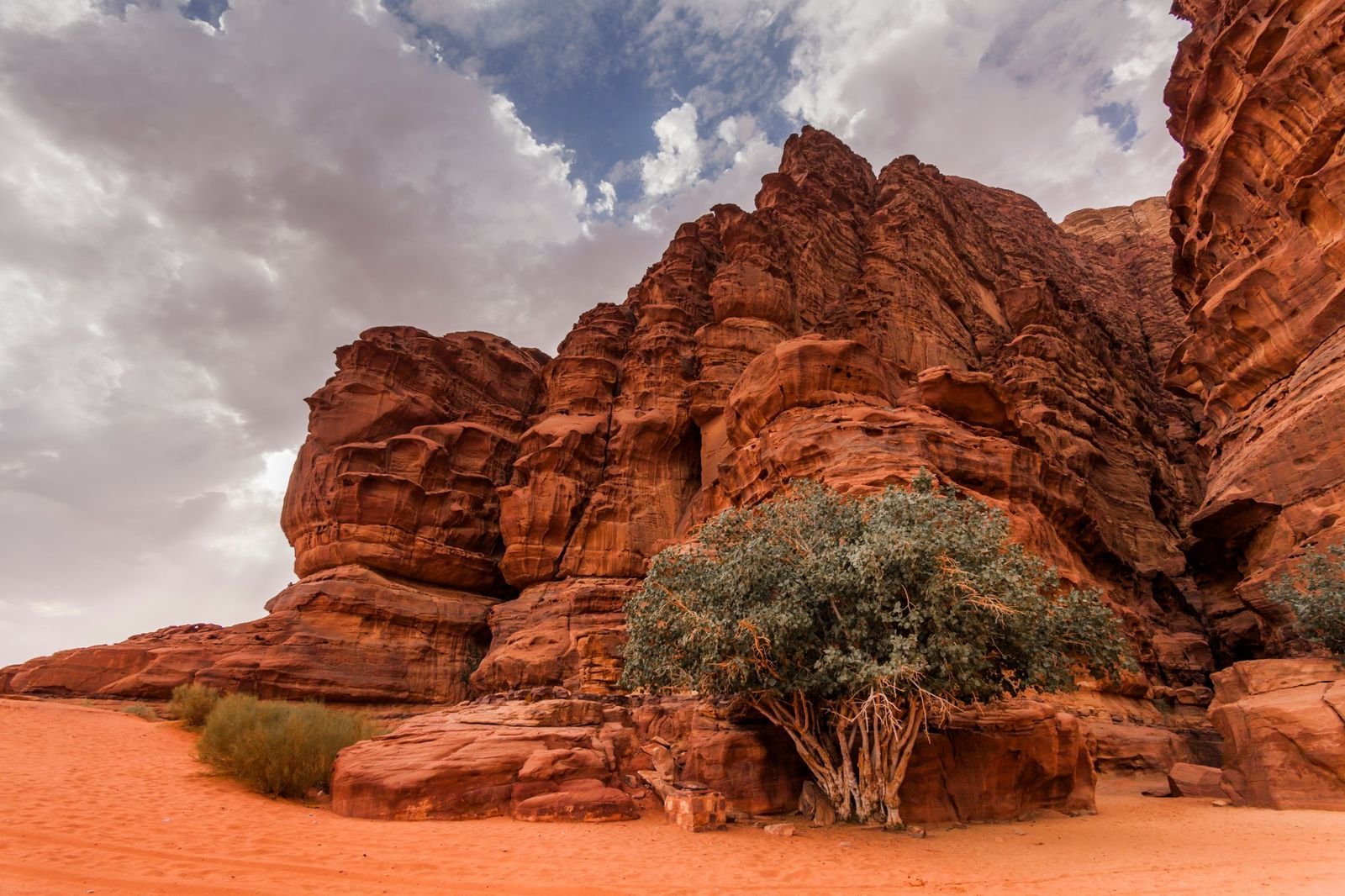
More than 100 bird species have been recorded in Wadi Rum, including birds of prey that nest in the cliffs and migrating birds in spring and autumn. Early morning near a spring or a fig tree is the best moment to see them.
Reptiles, scorpions and insects
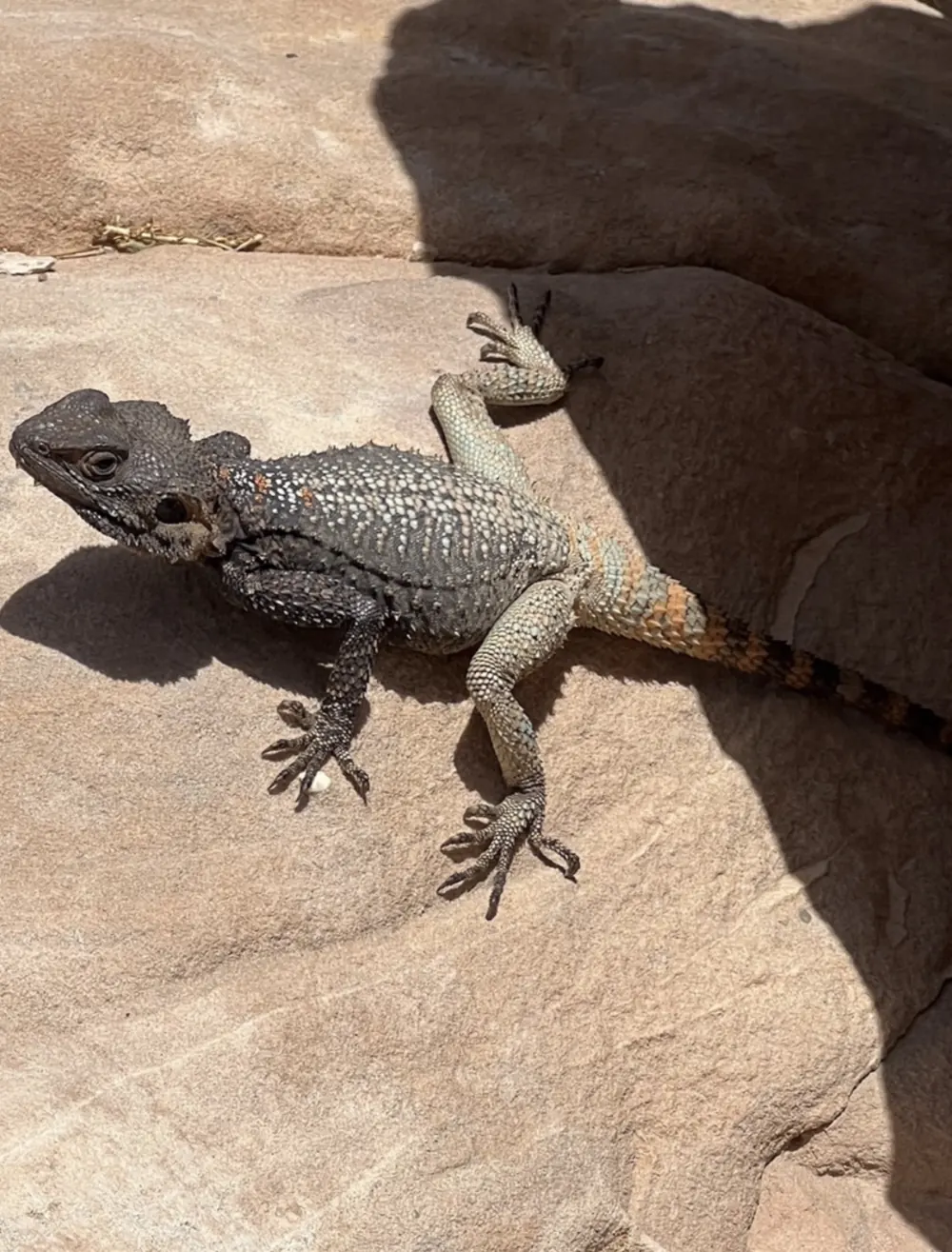
Lizards love the warm rocks, and you will surely see some. Snakes and scorpions exist too, but they are shy and rarely seen, mostly on summer nights. Wear closed shoes in the evening and shake them in the morning.
Watching wildlife with respect
- Keep your distance and never feed wild animals
- Be quiet at dawn and dusk, when animals are most active
- Do not leave food or rubbish: it attracts animals to camps
- Ask your guide: he will show you tracks and tell you who passed
Read the desert with a Bedouin
Tracks in the sand, a fig tree in the rock, camels at sunset: discover the living desert on our Wadi Rum jeep tour.
— Eid, your Bedouin guide at Wadi Rum Best Tours