“Will there be a sandstorm?” Many travellers ask me before they come. The honest answer: it can happen, but it is not frequent, and it is rarely like in the movies. Here is what you need to know.
How often are there sandstorms?
Most days in Wadi Rum are calm and clear. A few times a year, a strong wind lifts the dust and the sand, the sky turns yellow and the mountains disappear in the haze. A real sandstorm is a small part of the year: many of our guests never see one.
When do they happen?
Mostly in spring, between March and May, when hot winds come from the south and the east. Windy days can also happen in autumn and winter, often before a change of weather. Summer is usually calm, just hot.
What does it feel like?
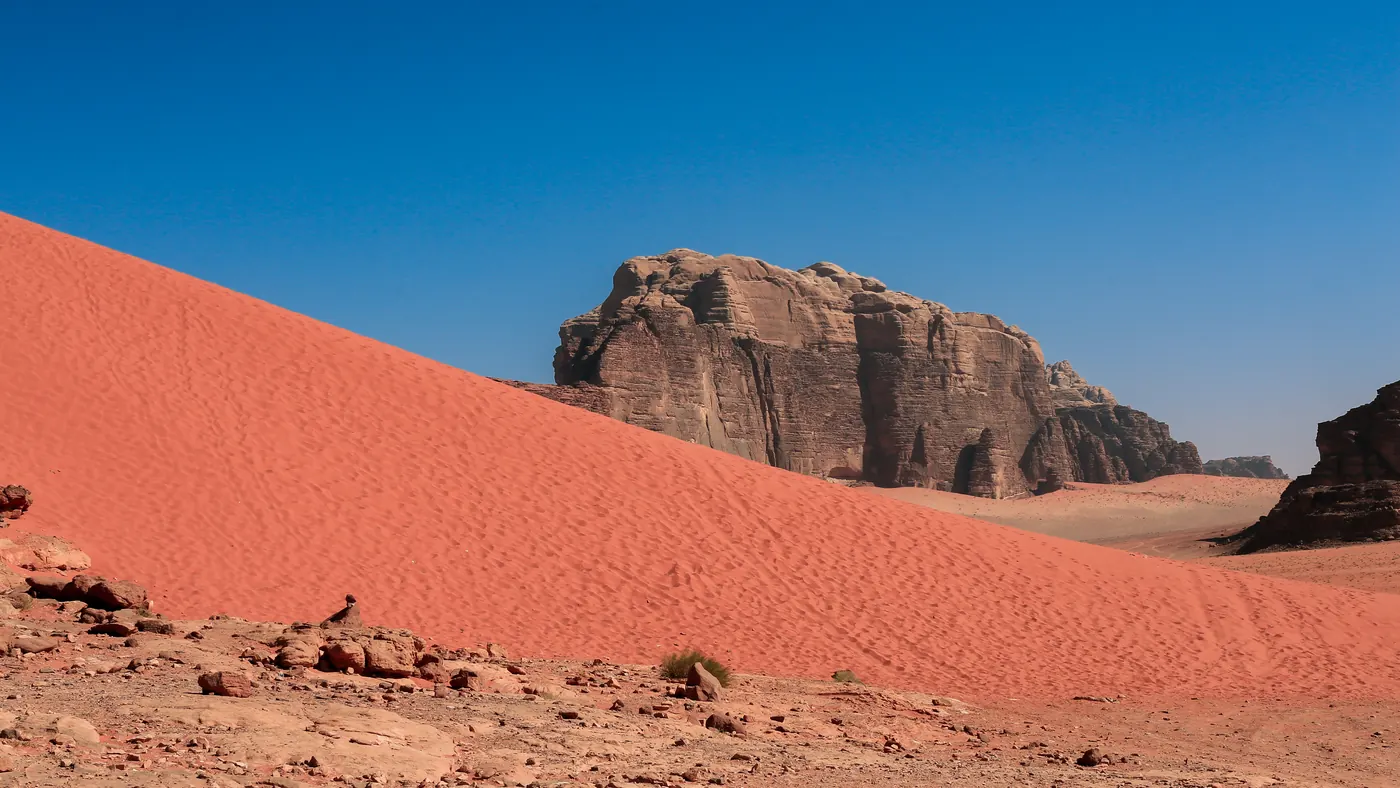
The wind pushes fine sand into your eyes, your nose and your bag. The light becomes strange and beautiful, and the temperature can change fast. Most of the time it lasts a few hours, rarely a whole day. When it stops, the air is clear again and the desert looks washed.
What we do when the wind rises
- We watch the sky and the forecast, and we change the route if needed
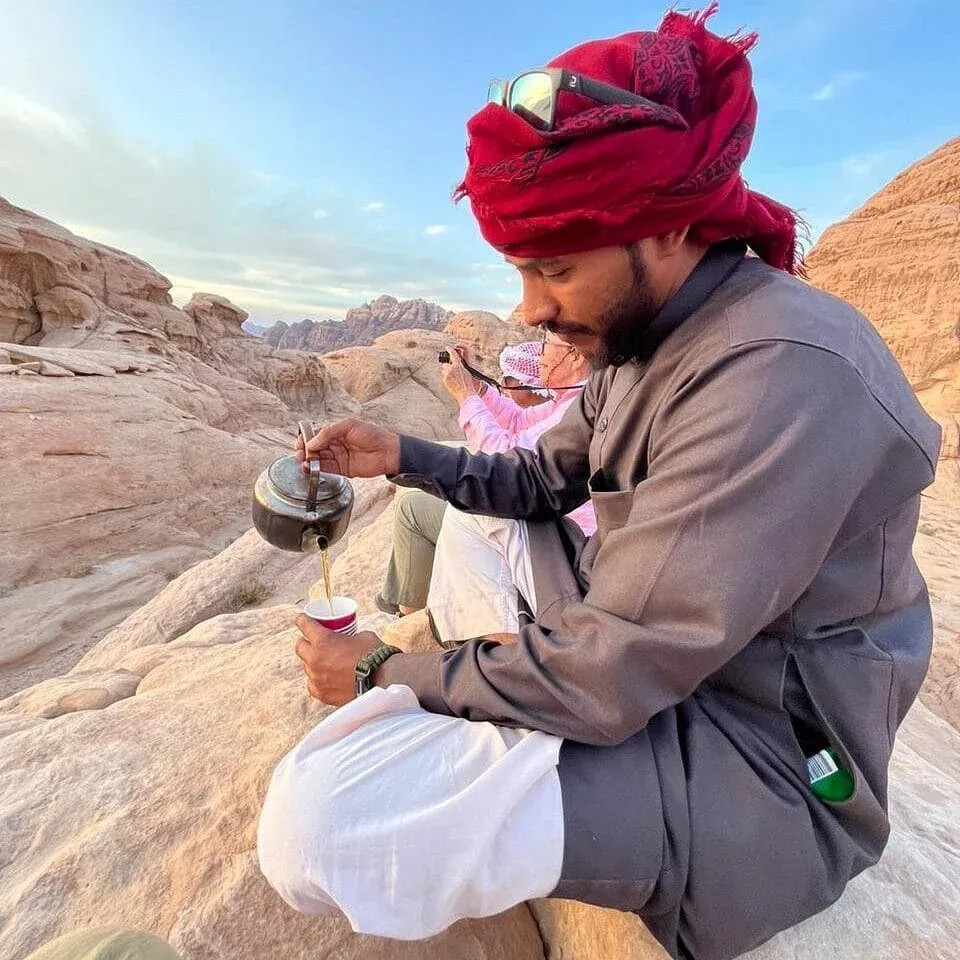
- We stop in the shelter of the rocks or at camp and make tea while it passes
- We avoid climbs, scrambles and exposed ridges in strong wind
- At night, the tents and our cave keep you protected
You are never alone in the desert with us: your guide knows where to wait and when to go.
What to bring
- A scarf or a shemagh to cover your nose and mouth
- Sunglasses, to protect your eyes
- A bag or a cover for your camera and phone
- Glasses rather than contact lenses on a windy day
Our full packing list is in what to wear in the desert, and the month-by-month conditions in the Wadi Rum weather.
A safe night in the desert
Bedouin camp, our cave or real beds under the stars, with a guide who knows the wind: our Wadi Rum overnight stays.
— Eid, your Bedouin guide at Wadi Rum Best Tours